

You’ve got your child’s diagnosis and a list of providers, but can’t help but feel like you’re supposed to already know how to choose between them.
You’re not expected to know this already. You just need to know what to look for.
When you’re exploring Applied Behaviour Analysis (ABA) therapy programs for your child, there’s a lot to consider:
- How do you know what type of program is appropriate?
- How many hours should your child receive?
- What should treatment goals focus on?
- How should progress be measured?
- What should you expect from the professionals supporting your child?
Research tells us that ABA can produce meaningful outcomes, but ABA isn’t simply something that either “works” or “doesn’t work.” Quality matters. Individualization matters. Intensity matters. Goals matter. Family involvement matters.
Here’s what you should know and ask when deciding on your child’s treatment.
Table of Contents
Ask: How Will You Define and Measure Progress?
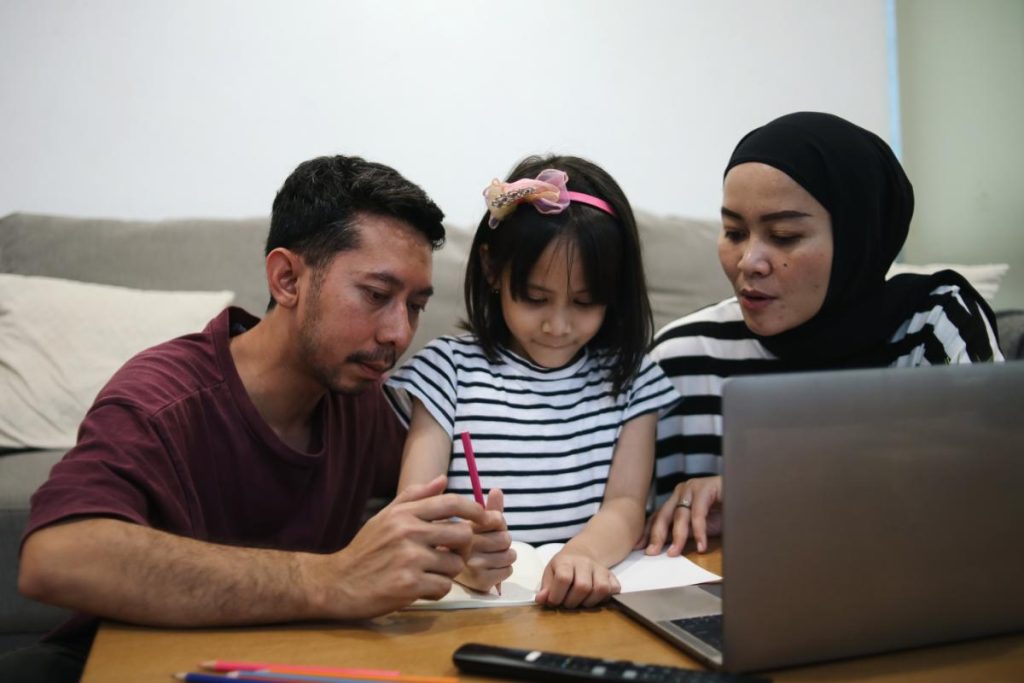
When families start ABA therapy, progress usually shows up in two layers.
The first is change on assessments: the scores and data showing your child is gaining skills. These tools are useful, so we rely on them.
The second is change that shows up at home, at school, and in the community. Researchers call this a “clinically significant” change: a difference that improves a child’s ability to participate, communicate, learn, and connect.
The two aren’t rivals. A rising score isn’t the enemy of real life, and real life isn’t a consolation prize for a slow score. In fact, one of the strongest signs that therapy is working is when both move together.
A good provider should be able to tell you, in plain language, how they’ll track both.
Questions to ask a provider:
- How will you establish my child’s baseline?
- How will goals be selected?
- How often will progress be reviewed?
- What happens if the data show an approach isn’t helping?
- How will you know whether skills are transferring outside therapy?
If you’re still new to ABA therapy, our What Is ABA Therapy article is a great place to start.
Look for Goals That Matter in Everyday Life
The best goals aren’t the ones that look impressive on paper. They’re the ones your child accomplishes on an ordinary day.
Look for a program working toward outcomes like these:
- Starting to use words, gestures, or a device to ask for what they need
- Joining other children in play for the first time
- Getting through a family outing with less stress for everyone
- Growing more independent with dressing, toileting, and daily routines
- Handling transitions and hard moments with less overwhelm
Noticing even one or two of the above means you’re seeing real progress. These everyday wins often matter more to a family’s quality of life than any number on a report.
If the initial goals on your child’s plan don’t connect to your daily life in a way you can picture, ask why.
How Was My Child’s Recommended Treatment Intensity Determined?
One of the first numbers you’ll hear is “hours per week.” It’s also one of the least explained.
Hours per week is the standard way to measure intensity: it describes how much ABA therapy your child receives, and it generally tracks with how broad the program is.
A focused program targets a smaller set of specific skills, like communication or a particular daily routine, and usually calls for fewer hours. A comprehensive program spans many developmental areas at once and requires more hours.
The range is wide: from under 10 hours a week to 40. There’s no universally correct number, which is exactly why the reasoning behind your child’s number matters more than the number itself.
What The Research Says About Intensity
Research from the 2026 individual participant data meta-analysis in the journal Autism Research pooled data from children who received early intensive behavioural intervention and found meaningful gains in adaptive behaviour and intellectual functioning.
At the group level, the amount of intervention mattered: weekly treatment hours were the strongest predictor of outcome.
Play-based developmental models also show promise. Research on the Early Start Denver Model (a naturalistic developmental approach) documented clinically meaningful gains in communication and everyday functioning, supporting a gentler, relationship-based path to skill-building.
A few honest caveats belong here. First, these studies describe what’s associated with good outcomes, not what’s guaranteed. The meta-analysis authors also flagged a key limitation: the studies didn’t use random assignment, so the findings are promising, not definitive.
ABA doesn’t make autism go away, and no responsible provider would say it does. The data simply suggest that intensity is worth taking seriously, and the number of hours per week shouldn’t be the same for every child.
Questions to ask a provider:
- Why are you recommending this number of hours for my child?
- What factors went into that recommendation?
- Will the recommended intensity change as my child progresses?
- How will you balance intervention with family life, school, community activities, and other priorities?
Research indicates that caring, evidence-based support, started early and delivered consistently, is associated with real gains in the skills that help children take part in daily life.
Did You Know? Autism is being identified in young Canadian children earlier than ever before. By 2023–2024, newly identified cases were highest among children aged 1 to 4, the exact window where early, consistent support can do the most good.
Look for a Program That Treats Parents as Partners

It’s surprising to many families that a skill only really counts when your child uses it outside the therapy room.
Clinicians call this “generalization,” the difference between a child who points to a picture in a session and one who walks into the kitchen and asks for a snack.
A companion idea, social validity, asks a very human question: does this change actually matter to your family in real life? Your observations answer that question, and they carry as much weight as the data we collect.
That’s why parent coaching and support is built into how we work, alongside generalization across settings, regular progress reviews, and goals chosen with you rather than for you. A program that keeps you at arm’s length is missing what makes skills stick.
Remember, you’re not outside this process. You’re part of the team.
Look for Individualized, Not Standardized, Treatment
No two children arrive with the same strengths, interests, or needs, so no two therapy paths look the same.
At The Portia Learning Centre, we measure success against goals that matter to your child and family, not against a standardized norm. Your child’s progress doesn’t have to look like anyone else’s.
Instead of comparing your child to a chart, ask a few grounded questions:
- Is communication becoming easier?
- Is your child developing more independence?
- Are challenging situations becoming more manageable?
- Is participation in family, school, and community life increasing?
- Are you feeling more confident supporting your child?
If you can answer “yes” to a couple of these, that’s real progress, even when a formal score hasn’t caught up yet.
Ask: How Are Clinical Decisions Made?
Great ABA programs can explain the reasoning behind their clinical decisions. At Portia, we don’t lean on any single measure to tell whether therapy is working.
We combine four key indicators:
- Standardized assessments. Tools like VB-MAPP, ABLLS-R, AFLS, and ESDM-informed measures give a consistent baseline and track change over time.
- Ongoing data collection. Our clinicians gather and analyze data at every stage, so decisions are guided by evidence instead of guesswork.
- Family feedback. We regularly ask about your goals, your priorities, and the change you’re seeing at home.
- Functional outcomes. Above all, we watch for gains in communication, social and play skills, emotional regulation, daily living skills, school readiness, and community participation.
Together, they give a fuller picture than a test score could on its own. What matters most is that a provider can walk you through how those four shape the decisions they make about your child’s program, and when they’d change course.
Look at How Therapy Is Actually Delivered
Two programs can both call themselves “ABA therapy”, but feel completely different to your child.
At Portia, we believe children learn best when they’re engaged, motivated, and supported through relationships they trust.
Our play-based, developmental approach to ABA builds skills inside natural interactions and everyday experiences, not isolated, repetitive drills. The goal isn’t for your child to perform a skill in a session.
It’s for that skill to show up and stay in the moments that matter to your family: the playground, the dinner table, and your daily life.
When you’re evaluating a provider, ask what a session actually looks like, and how they keep a child motivated.
How Portia Supports Families
Whether your child was recently diagnosed, is showing developmental differences, or you’re simply looking for guidance, our team is here to help.
Our services include free developmental screenings, comprehensive and focused ABA, parent coaching, social skills programming, school readiness, life skills, and consultative ABA, all aimed at the same goal: skills that make a real difference in everyday life.
Take the First Step
Progress isn’t about numbers on a chart. It’s about creating opportunities for your child and family to thrive. Your child’s potential is within reach.
When you’re ready, book a free screening with The Portia Learning Centre or complete an intake form, and together we can build the right support around your family in Ottawa and Durham Region.