

You know your child is capable. You just need help finding what’s in the way.
Maybe homework ends in tears. Maybe the teacher has called again and says your child is falling behind in reading or math. Maybe your child has started saying they hate school.
You are not failing, and neither is your child. These are real challenges, and they deserve real support. We’ve been walking alongside Ontario families since 2006.
What Is the ABA Academic Support Program?

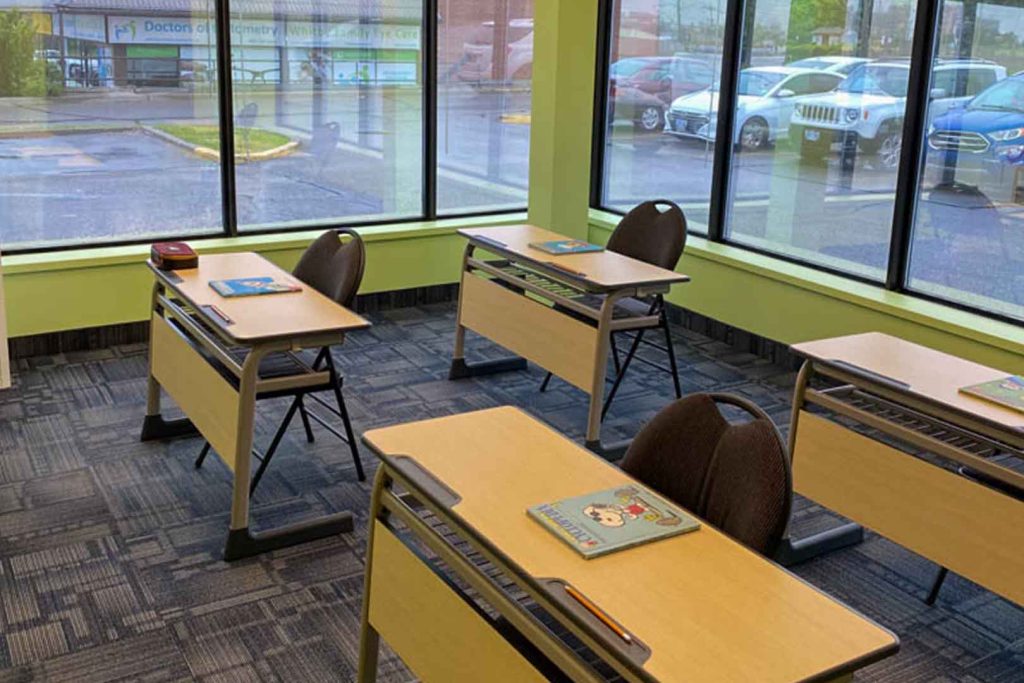
Many children who struggle at school don’t need more homework. What they really need is someone to understand exactly what’s making learning hard in the first place.
Sometimes it’s a gap in a specific skill. But often, it’s the behaviours learning depends on: sitting down and focusing intently, organizing learning materials, following multi-step instructions, or staying motivated when a task feels too hard.
Our ABA Academic Support program addresses both at once. The academic coach brings the what: the academic skills your child is missing or needs help with. Meanwhile, our Behaviour Analyst brings the how: teaching strategies rooted in Applied Behaviour Analysis to help your child learn in the way that works best for them.
This isn’t tutoring with an ABA label attached. Academic goals stay at the centre of the program, while our team identifies and addresses the barriers that keep your child from reaching them. The goal is real progress in academic skills, along with greater independence and the ability to use those skills at school and at home.
When We Recommend Something Different
During our free screening, we sometimes find that a child would benefit more from intensive one-to-one support with our ABA programs, either first or alongside academic support.
Some children have an underlying motor skill challenge best supported by an occupational therapist, a speech or language need that calls for speech-language therapy, or mental health concerns that our psychotherapy and psychological services team can help with.
The reverse can happen, too. Some families come to us ready to pull their child out of school for intensive ABA, and we actually recommend they stay in school with after-school academic support instead.
Who Is This Program For?
The program is designed for school-age children and youth, from about Grade 1 through Grade 12. Both a Grade 1 student facing challenging new subjects and a high school student finding the workload harder each year can benefit.
The program may be a good fit if your child:
- Has autism, ADHD, a learning disability, or a developmental disability, or has no diagnosis but faces barriers to learning
- Is behind in an academic skill such as reading, math, writing, or spelling
- Has trouble with attention, organization, frustration tolerance, or motivation
- Struggles to start or finish homework independently
- Has an IEP and needs support working toward its goals

Did You Know? Among Canadian children and youth aged 5 to 17 with autism, learning disability is the most common co-occurring condition, reported for 48.1%, and more than three-quarters of those attending school have special education needs, according to the Public Health Agency of Canada.
What Does a Session Look Like?
Sessions take place in your home or virtually, usually after school or on weekends. Before sessions begin, the Behaviour Analyst meets with the academic coach and your family to set your child’s goals.
During each session:
- The academic coach works one-to-one with your child at a learning space set up at home or online.
- Typically, sessions are 1-2 hours a few times per week. However, it really depends on the child’s needs. Some clients benefit from more frequent, consistent services every day after school for 45-60 minutes, while others benefit more from 1 longer 2-hour session twice per week. We don’t recommend more than 5 days per week or longer than 2 hours.
- Teaching strategies are ready in advance. The coach logs into Portia ABA Clinic Software, where the Behaviour Analyst has outlined how to teach each skill. For example: breaking tasks into smaller steps, using visual schedules and reminders, or building rewards into the session.
- Learning starts where your child is. For a child who’s struggled with school, early sessions may focus on making learning fun again through games and playful, natural activities.
- The coach collects data, as in an ABA program, to track successes and areas for improvement.
- The Behaviour Analyst reviews the data and adjusts the plan before the next session.
A Portia Behaviour Analyst oversees every child’s program, and our clinical team is regulated by the College of Psychologists and Behaviour Analysts of Ontario (CPBAO).
The Behaviour Analyst programs the teaching strategies, reviews session data, and adjusts the plan as your child progresses. Your child’s academic coach comes from TutorBright and is matched to your child based on the tutor’s expertise and your child’s needs.
You’re part of the team as well. We work closely with families, revisit goals together, and make changes as your child grows.
Some children thrive online. They’re comfortable navigating a computer, and virtual sessions make learning easier to access.
Others need a person in the room for direct, one-to-one support. We offer in-home services or virtual sessions. In-home sessions take place in a quiet learning space, but we are flexible depending on the home.
We’ll help you choose the format that best suits your child, and it can change as their needs do.
Because sessions happen outside school hours, your child’s teachers aren’t in the room, but ideally they’re part of the process.
With your consent, we reach out to teachers and support staff for feedback and review your child’s IEP. We may share strategies that are working in sessions with the school, and when the school starts something new, like a checklist system, we can build it into your child’s program.
If you’re preparing for school meetings, our parents’ guide to IEPs and advocacy can help.
The ABA Academic Support program is eligible for funding through Ontario Autism Program core clinical services, and families can also pay privately.
Since Registered Behaviour Analysts are recognized as medical practitioners for tax purposes, families of children with a disability may be able to claim sessions under the Medical Expense Tax Credit.
For a broader look at your options, see our guide to paying for ABA therapy in Ontario.
You’ll receive progress reports highlighting the skills your child has achieved. Families often see progress in a few ways:
- Academic gains in the subjects we’re targeting, often reflected in grades and report cards
- Stronger learning behaviours, such as attending, focusing, and following multi-step instructions
- More independence with homework and schoolwork
- Greater confidence, self-esteem, and excitement about learning
Every child’s path is different, and because we collect data in every session, we can adjust along the way. If we learn in the first few months that more is going on than we first thought, we change the plan.
How to Get Started
What to Bring to Your Screening
If you have them, bring recent IEPs, report cards, psychological assessments, occupational therapy reports, or any other assessment reports about your child’s learning and development.
We’ll review them during the screening to guide our recommendations.

The Portia & TutorBright Partnership
We created this program after recognizing that some children didn’t need intensive ABA but were struggling at school, and that their struggles weren’t only academic. These children needed an ABA approach to learning that could support schoolwork.
Over time, we also saw how many children had developed a negative relationship with learning. When curriculum is too easy or too hard, or when barriers go unnoticed, school can become something a child dreads.
Repeated enough times, “I hate homework” can become “I hate learning.” For many of these children, the first step is helping them enjoy learning again.
That’s why TutorBright felt like the right partner. Building self-esteem, self-confidence, and a love of learning are among their core values, which we deeply connect with. TutorBright also contributes academic expertise through its coaches, and we contribute behavioural and learning expertise.
You can read more about how the program began in our TutorBright partnership announcement.

– Math and numeracy
– Printing, writing, and spelling
– Subject-specific goals drawn from report cards and IEPs

– Following multi-step instructions
– Using an agenda, organizing time, and completing tasks
– Frustration tolerance and motivation
– Setting personal learning goals, especially for older students
– Completing homework independently
Some children work mostly on academics. Others don’t work on academics at first at all: they’re building the skills that make independent learning possible. Many need a combination.
Finding the Root Cause
When a child struggles with an academic skill, we ask why. Is it a skill gap? A motivation issue? Or difficulty sitting, attending, and getting through each question?
For example, a child might fully understand addition in math but have weak working memory, so solving 2 + 2 in their head is hard. With paper to work on it, or hands-on tools like an abacus, that same child may succeed.
Our ABA assessments aren’t diagnostic, but they help us identify each child’s strengths, needs, and learning style so we can target the right skills from the start.
Frequently Asked Questions
No. An academic coach teaches the academic content, but a Behaviour Analyst designs how it’s taught using ABA strategies, data collection, and ongoing adjustments. The program addresses the barriers to learning, not just the schoolwork.
No. Many children in the program have autism, ADHD, or a learning or developmental disability, but an official diagnosis isn’t required. Our free screening helps determine whether the program is the right fit.
The program supports school-age children and youth, from about Grade 1 through high school.
Yes. Some children build foundational learning skills in intensive ABA before moving into academic support, and others do both at once. We’ll recommend what fits your child.
Yes, the program is eligible for core clinical funding through the Ontario Autism Program. Families can also pay privately and may be able to claim sessions under the Medical Expense Tax Credit.
Bring any recent IEPs, report cards, and psychological or occupational therapy assessments you have. They help us make the most useful recommendations.
Take the First Step
Ready to explore what’s right for your child?
Together, let’s take the first step toward meaningful progress.
